How We Can Help People in Scranton and Beyond With Probation/Parole Violations
In many instances in which the Commonwealth convicts a person of a crime, the person may be sentenced to probation or may be released on parole after serving part of a prison sentence. Probation and parole allow people convicted of crimes to work and spend time with loved ones outside prison, subject to certain conditions. People who fail to comply with the conditions of their probation or parole may face significant penalties, including imprisonment.
If you were recently charged with a parole or probation violation, you should speak with a capable attorney to discuss whether you may be able to avoid incarceration. The Scranton probation violation lawyers at Lenahan & Dempsey, P.C., can assess the facts of your case and explore the arguments that you may be able to outlined in your defense to help you strive for a successful result.
Probation Violations
While the terms probation and parole are often used interchangeably, they have different meanings under Pennsylvania law. Probation is a sentence that allows a person convicted of a crime to avoid going to jail, subject to conditions set forth by the sentencing court. People sentenced to probation are generally required to meet with their probation officer on a regular basis and refrain from engaging in any illegal activity.
They may also be required to attend certain classes or pay fines or restitution. A person who violates the conditions of his or her probation may face serious consequences. For example, he or she may be sentenced to an additional term of probation or imprisonment for the length of time to which he or she could have originally been sentenced. A probation violation attorney in Scranton can help a defendant try to avoid these harsh consequences.
Parole Violations
Conversely, parole is a release from prison prior to the end of a term of incarceration, after being granted parole by a parole board. A person released on parole must comply with the conditions of his or her parole. Generally, the conditions imposed on a parolee in Pennsylvania include an obligation to maintain regular contact with the person’s parole agent and to notify the agent of any change in employment.
People on parole typically must also obtain their parole officer’s written permission prior to changing their residence or leaving the district. They are also usually prohibited from engaging in certain behavior, such as possessing firearms. If a person is found guilty of a parole violation, his or her parole may be revoked, and he or she may be ordered to return to prison to serve the remainder of the sentence.
Types of Parole Violations
Under Pennsylvania law, people who violate parole are divided into two categories: technical parole violators (TPVs) and convicted parole violators (CPVs). (As our Scranton probation violation attorneys can explain, probation violations are similarly divided.) A TPV is a parolee who violates the conditions of his or her parole without committing a new crime.
Examples of acts that may result in a technical parole violation include moving without permission, contacting a victim of a domestic violence crime, or violating a curfew. The penalties that a TPV may face depend on the nature and frequency of the violation. A CPV is a parolee who violates parole by committing a crime. CPVs will remain in prison following their arrest until their new charges are resolved, regardless of whether they can post bail.
CPVs and TPVs have a right to a violation hearing to determine whether they violated the terms of their parole, and they have a right to be represented by counsel during the hearing. The prosecution’s burden in parole violation hearings differs from the burden imposed in a criminal trial.
The prosecution must merely prove that the parolee violated the conditions of his or her parole by a preponderance of the evidence, which simply means that the prosecution must show that it is more likely than not that a violation occurred.
What to Expect During Meetings With Parole/Probation Officers
Meetings with parole or probation officers in Pennsylvania typically involve the following:
- Initial Appointment: After sentencing, your assigned probation officer will contact you to schedule an initial meeting. This is an opportunity to ask questions and understand the terms of your probation.
- Review of Terms: During meetings, the officer will review the conditions of your parole or probation, which may include restrictions, required programs, or community service.
- Monitoring and Reporting: Regular check-ins are conducted to monitor compliance with the terms. This may include discussing employment, housing, and any required treatments or classes. You may also have to endure drug testing.
- Documentation: You may need to provide proof of compliance, such as pay stubs, attendance records, or other documentation. This works to show that you have not been committing a crime while on parole.
- Support and Guidance: Officers often provide resources or referrals to help individuals succeed during their probation or parole period.
How Much Jail Time Do You Get For Violating Parole?
How much jail time you get for violating parole in Pennsylvania depends on the severity of the violation:
- Minor Violations: Technical violations, such as missing a meeting, may result in warnings or temporary confinement.
- Parole Violator Centers: For certain violations, individuals may be sent to a Parole Violator Center for 60 to 120 days, where they must complete a program before returning home.
- Severe Violations: Serious or repeated breaches can lead to reincarceration for the remainder of the original sentence.
Speak with a Skilled Criminal Defense Lawyer
If you are charged with violating the conditions of your parole or probation, you should speak with a probation violation lawyer at our Scranton firm. At Lenahan & Dempsey, P.C., we can vigorously advocate in your favor to help you strive to retain your liberties in the face of criminal charges.
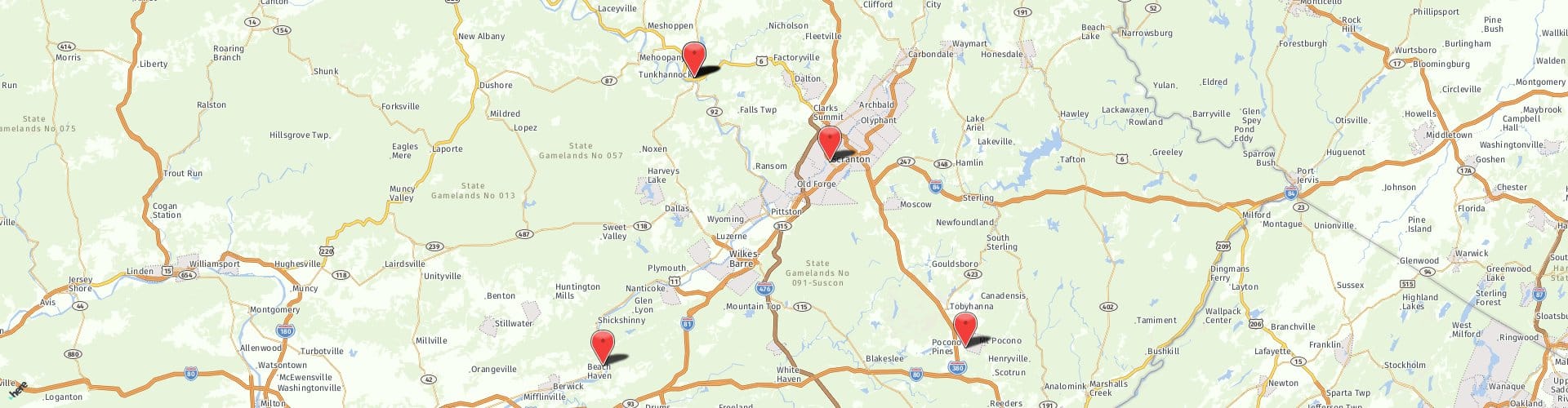
We also assist people charged with numerous other crimes, such as violent crimes, DUI, white collar crimes, theft crimes, drug crimes, gun crimes, and property crimes. From offices in Scranton, Tunkhannock, New Berwick, and the Poconos Mountains region, we defend people in criminal matters in Lackawanna, Luzerne, Columbia, Lycoming, Monroe, and Montour Counties. You can call us at 570.356.0497 to discuss the specifics of your case at no obligation.